ENVIRONMENTAL DESIGN
Animal Health Wall Sculpture
The brief came directly from the president of the Animal Health division of a major pharmaceutical company: create something for his executive area that would stop people in their tracks. Something that would make people walk into the space and say wow, and immediately understand the global reach and purpose of the division he led.
The result was a unique, one of a kind, large-scale wall sculpture: hundreds of plastic animals, painted and mounted on plexiglass continent shapes arranged into a world map - a literal, tactile, quietly spectacular expression of one simple message: Global Animal Health.
The piece went on to win awards from Hermes, the Art Directors Club, Graphic Design USA, the Communicator Awards, Creativity International, and more - recognized both domestically and internationally.
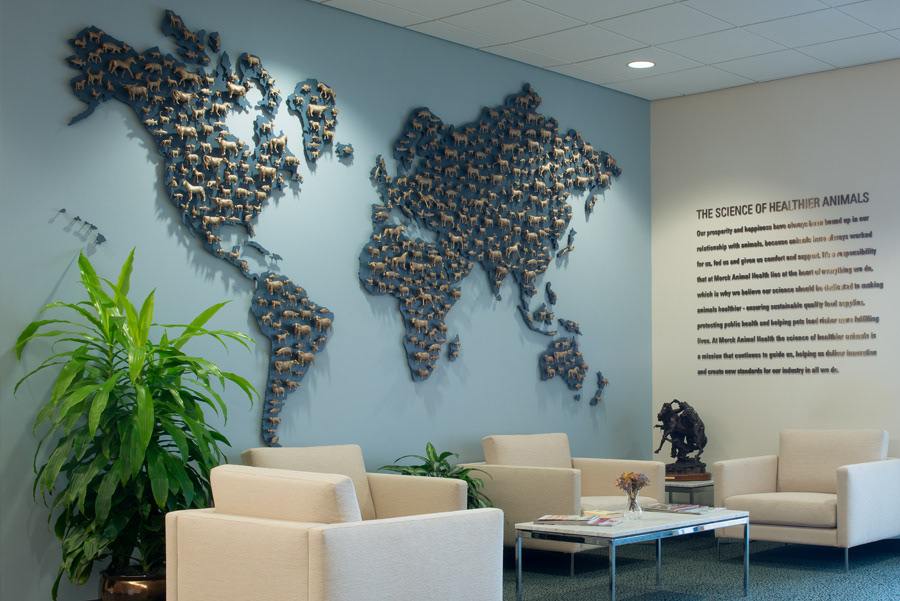
Finished installation - full view
The completed sculpture stretched across the executive area wall - continent shapes in plexiglass, populated with painted animal figures mounted at varying depths to create dimension and shadow. Brushed metal typography alongside the piece carried the division's mission in the same considered, materials-forward language as the sculpture itself. The overall effect was part art installation, part brand statement - something that belonged in a gallery as much as a corporate office.
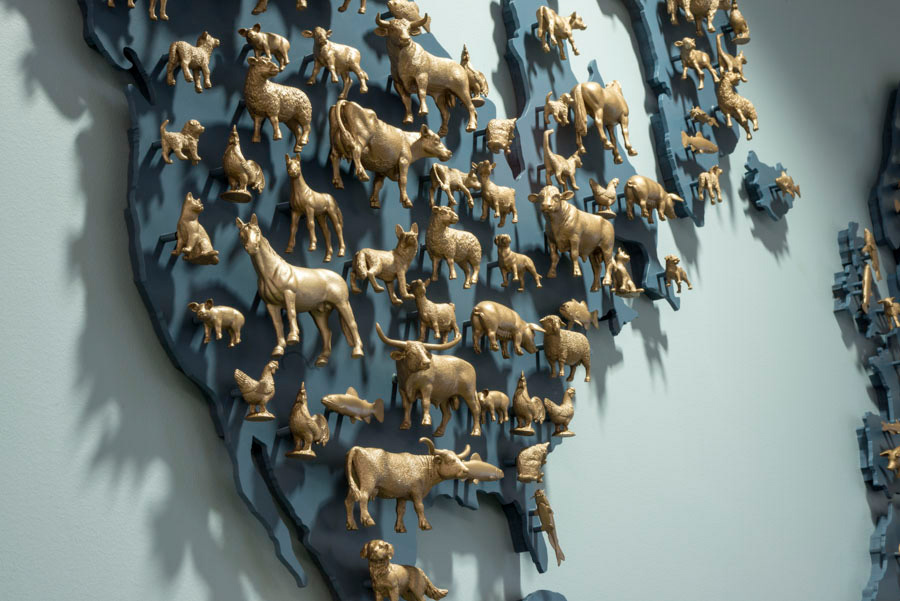
Detail view - animal placement and continent shapes
Up close, the piece rewarded attention. Animals were placed with input from the Animal Health division's own experts - species native to each region positioned on the corresponding continent, accuracy embedded in what could easily have been purely decorative. The plexiglass panels caught light differently at different times of day, giving the piece a quality that changed depending on when and where you stood.
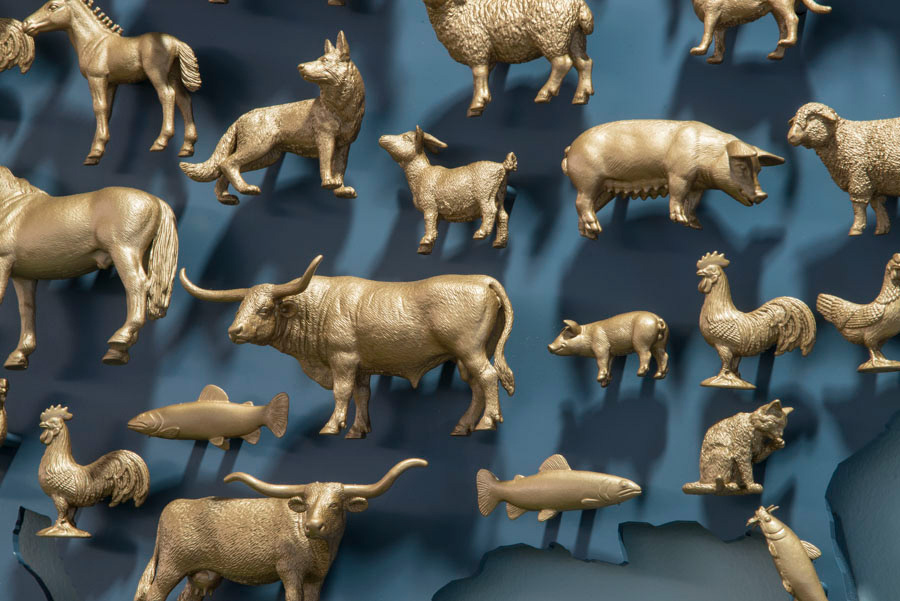
Detail view - animal placement and continent shapes
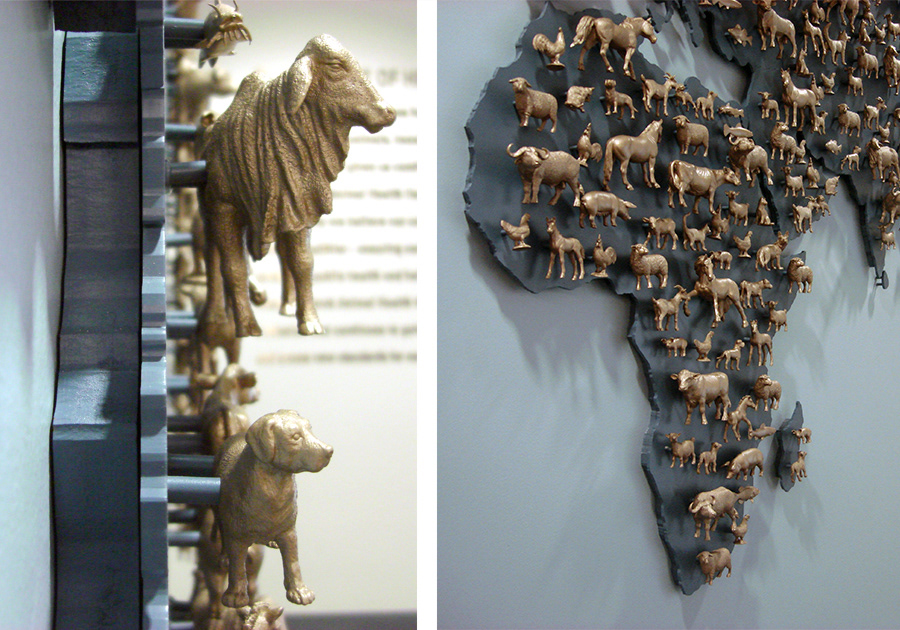
Detail side view - animal placement and continent shapes
The sculpture was part of a larger environmental design installation for the same client, but the executive area was always the centerpiece: the room where the concept had the most room to breathe and the most to say.
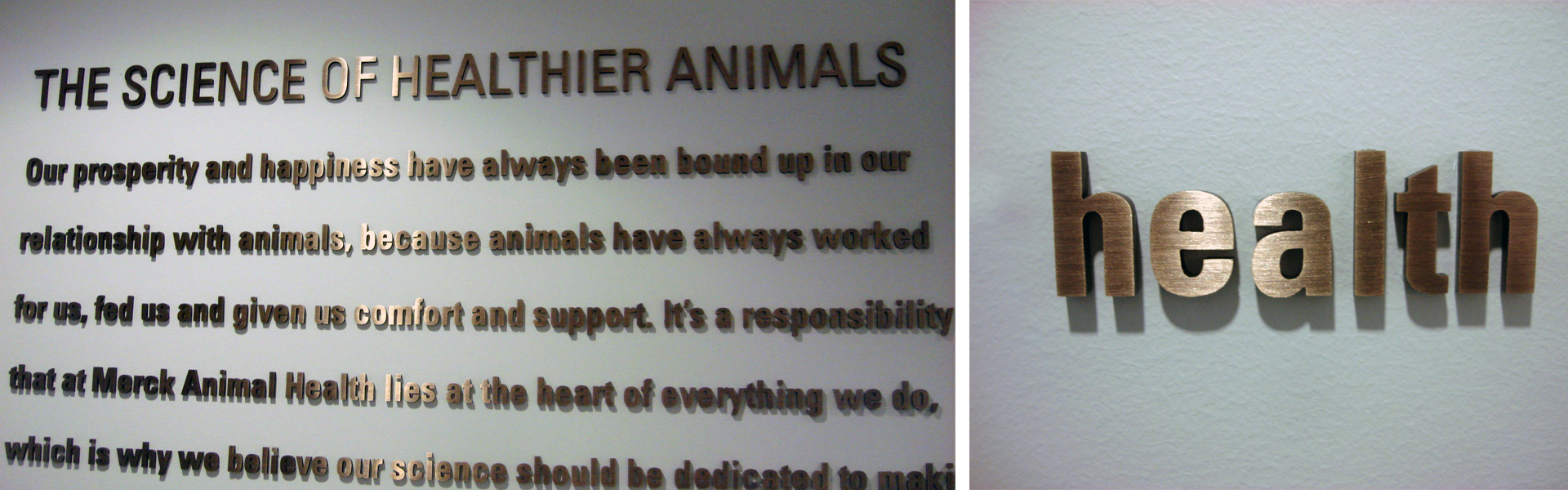
Brushed metal typography and mission statement
The typographic element was designed to complement rather than compete. Brushed metal letterforms carried the division's mission statement alongside the sculpture, grounding the more expressive visual work in the language of the organization. Together, the two elements did what the best environmental design does: communicated a complex idea instantly, and held up to long, close examination.
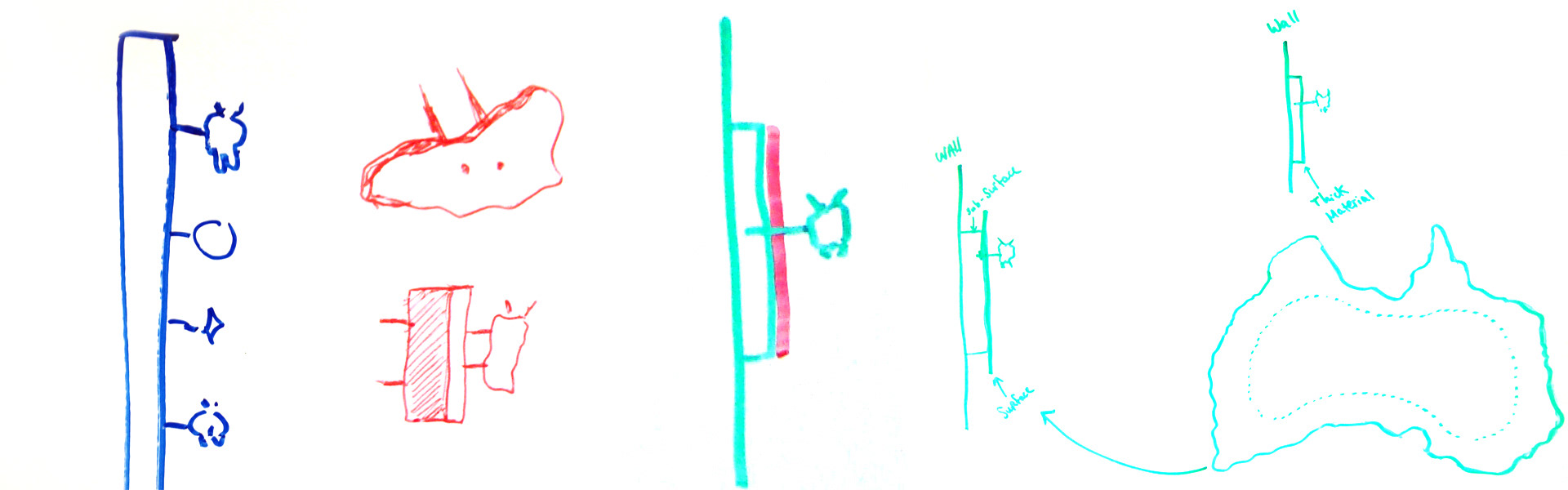
Whiteboard sketches - early ideation
It started, as most good ideas do, at a whiteboard. Several directions were explored and discarded before the right concept emerged: plastic animals, arranged into the shape of a world map, mounted with depth to create a sculptural quality. The idea was simple enough to explain in a sentence, which was a signal it was worth pursuing. But simple to explain and easy to sell are different things, and a concept this unusual needed more than a sketch to land.
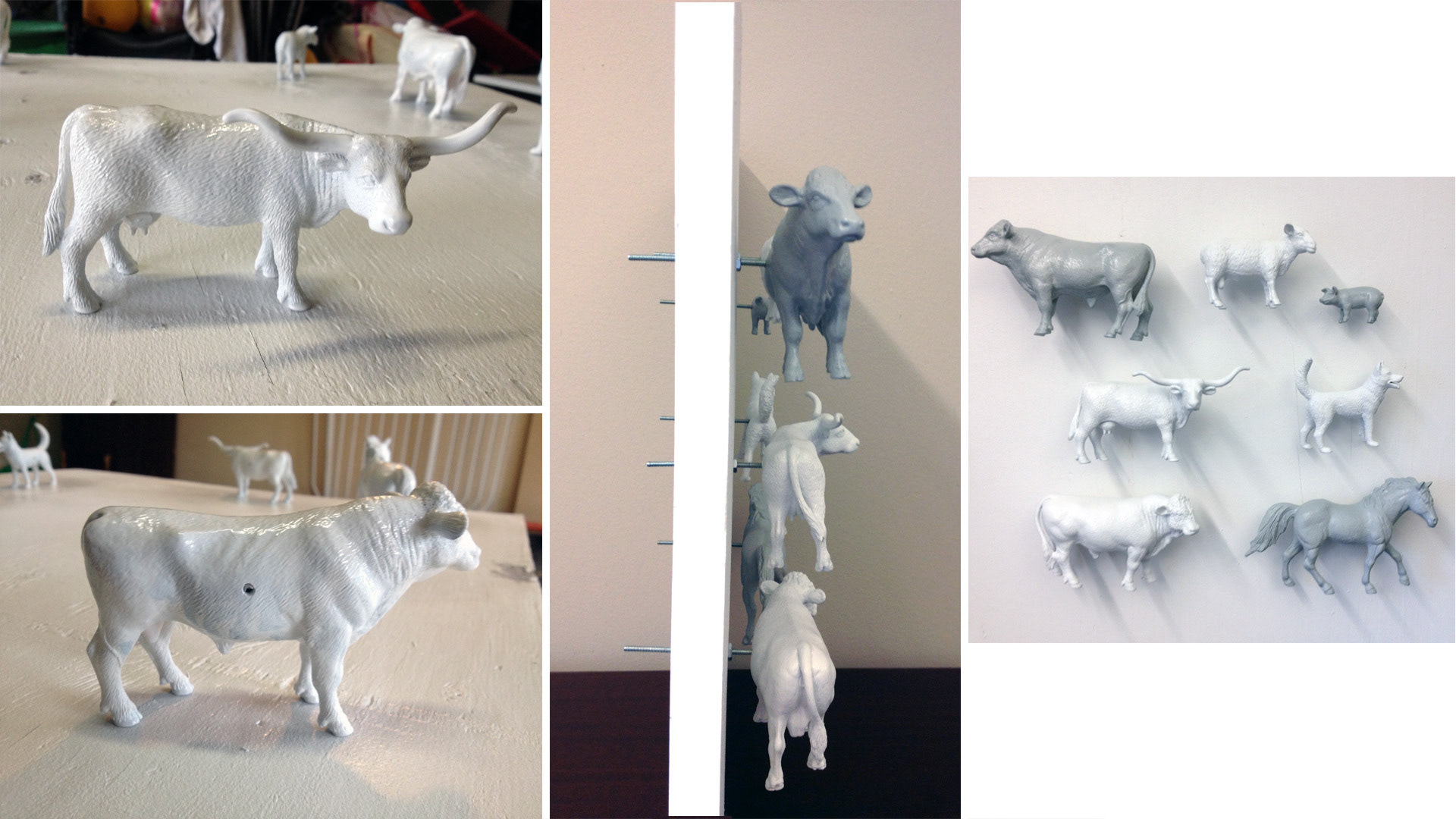
Garage prototype - painted animals, scrap wood, nuts and bolts
The first prototype was built in my garage over a weekend. Toy store animals, spray paint, scrap wood, and hardware assembled by hand into a rough but legible model of the final concept. It was just enough to communicate the idea convincingly. The president said yes.
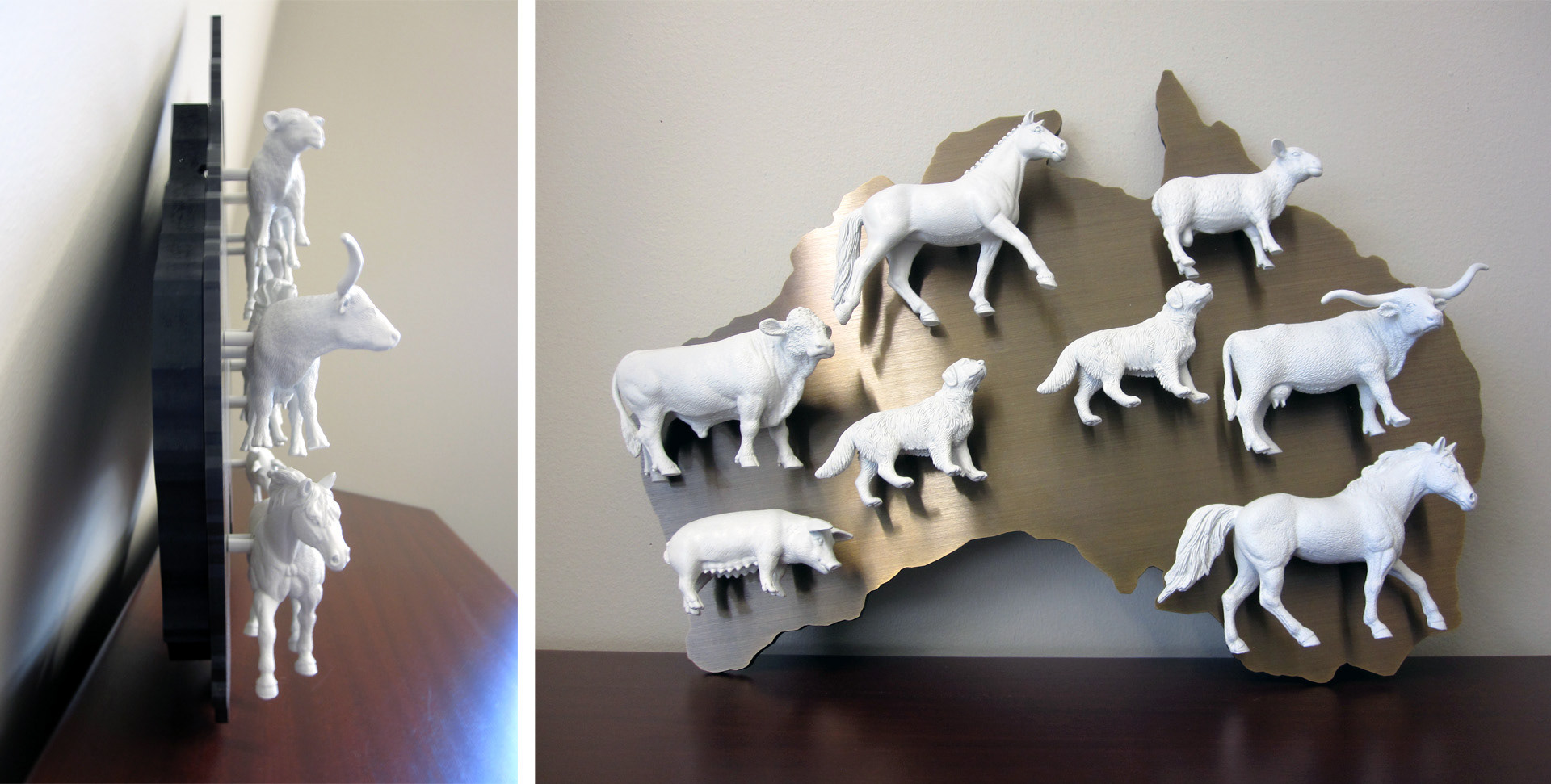
Fabrication partner prototype - materials testing
With the concept approved, the challenge shifted to fabrication at scale. A connection to a design and fabrication firm with the right equipment and craftspeople made the next phase possible. The first professional prototype was beautiful, and far too heavy. Metal gave way to plexiglass; the color palette was refined; the structural approach was reworked until the piece could actually be mounted on a wall without bringing it down with it.
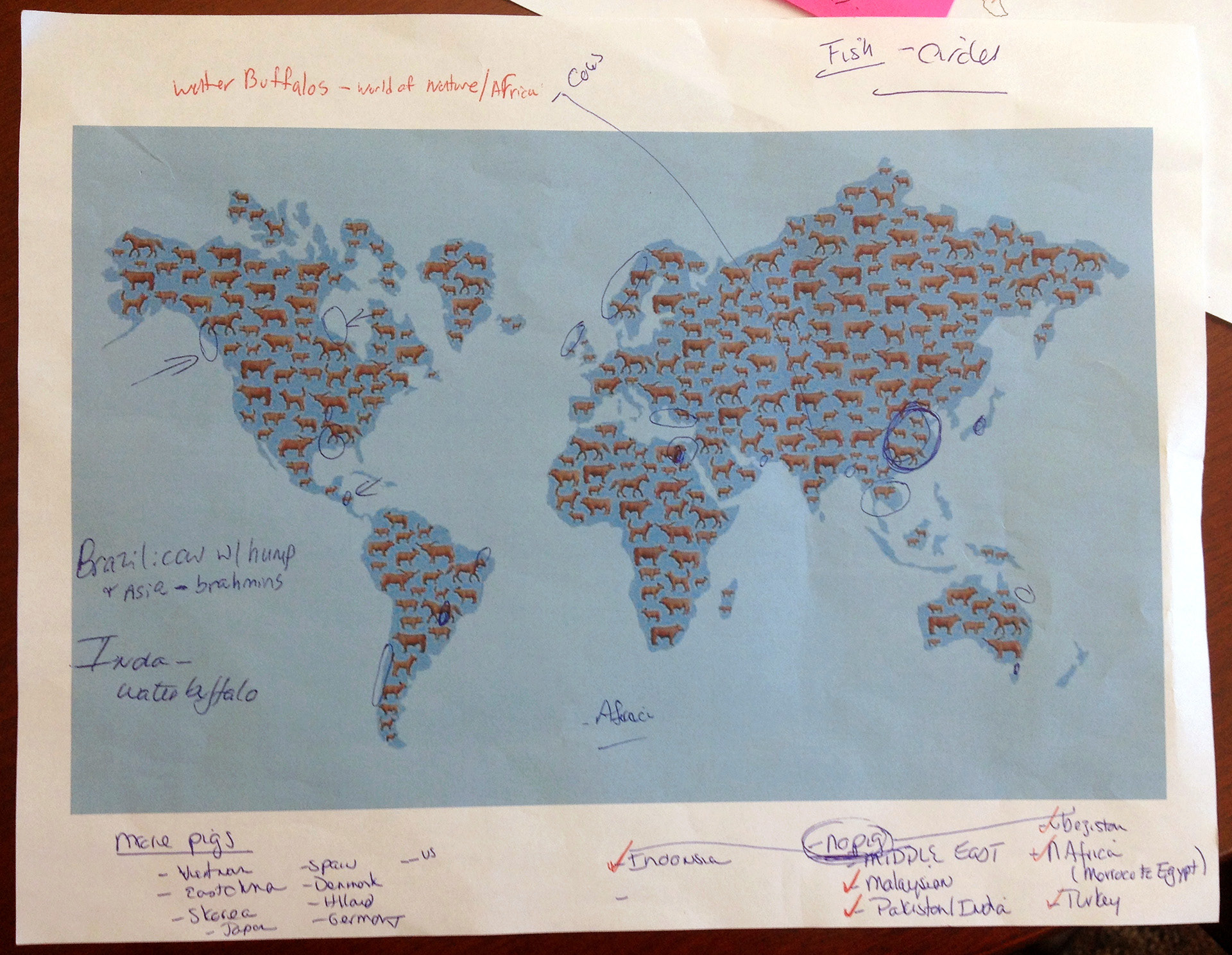
Reduced-scale print and animal placement planning
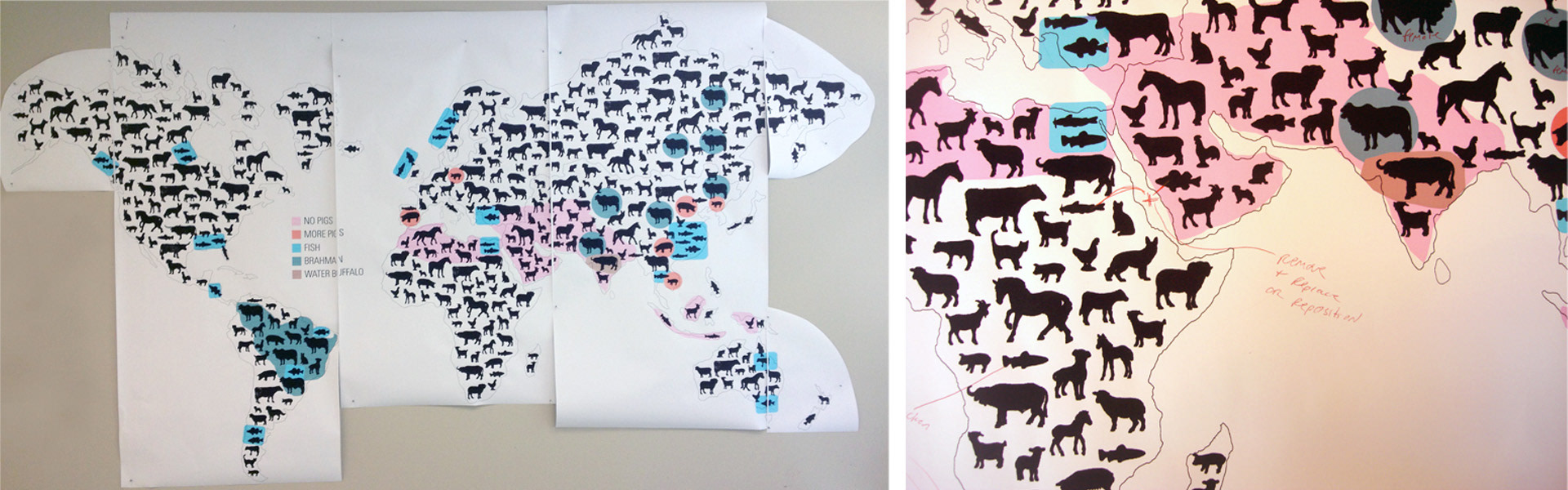
Full-scale print and animal placement planning
The final layout was printed at full scale on a large-format printer, giving the team a precise map for animal placement before a single hole was drilled. Refinements followed, positioning adjusted in consultation with the Animal Health team to ensure species were correctly located by region. Every animal was accounted for on paper before the fabrication process began.
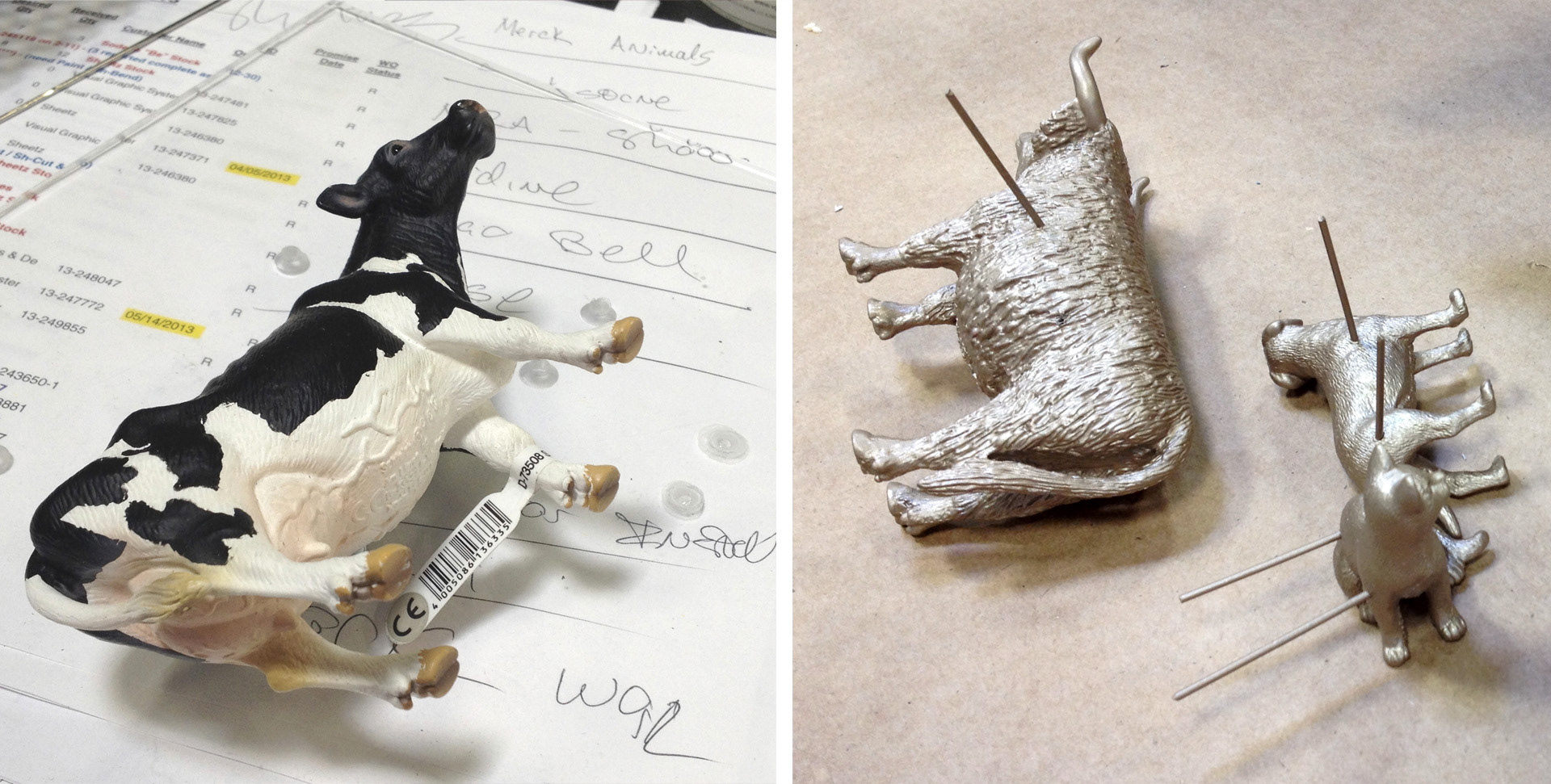
The Amazon order - animals awaiting paint
At this point, what was likely the largest single order of plastic animals ever placed on Amazon arrived at the shop. Each one was painted by hand and drilled for mounting, a painstaking preparation process that the final installation made entirely invisible, which was exactly the point.
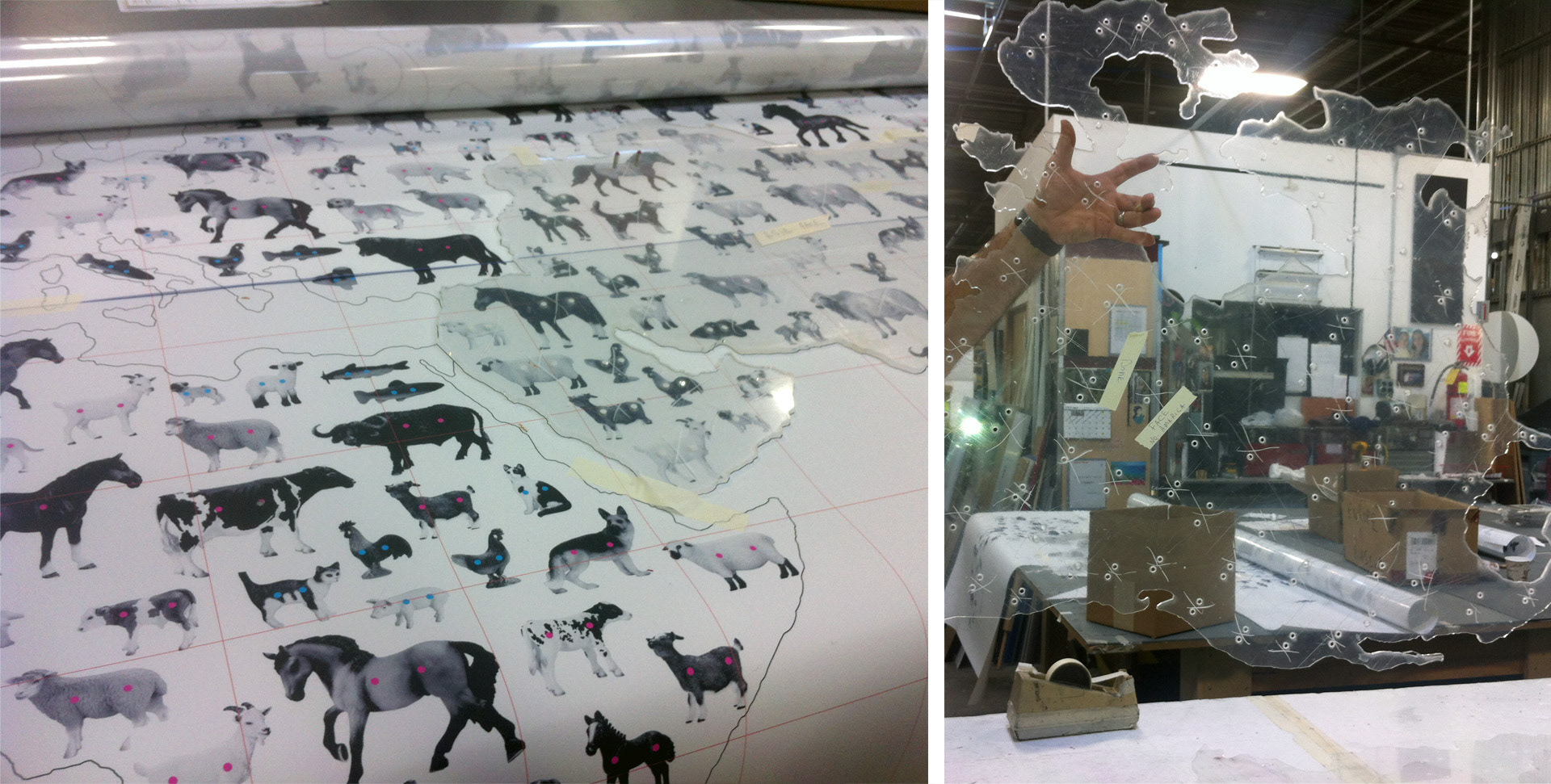
Fabrication - blueprints, drilling, plexiglass cutting
The fabrication instructions were detailed enough to function as technical drawings: animals mapped to blueprints, drill points marked, plexiglass panels cut to continent shapes and aligned to specification. The craftspeople in the shop executed with precision, a collaboration between design intent and fabrication expertise that neither could have achieved alone.
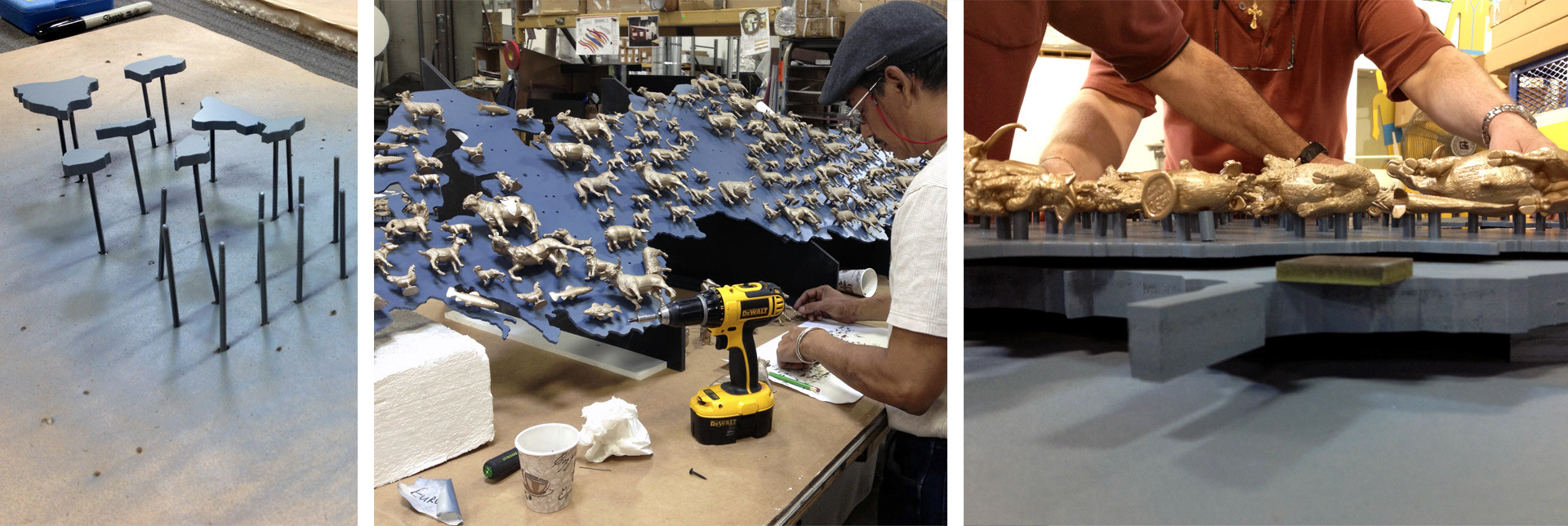
Shop floor - assembly in progress
Paint applied, panels cut, animals mounted. The shop floor became an assembly operation, every piece moving toward its place in a composition that had existed only on paper and in a rough garage prototype until now. The scale of it only became fully apparent when the pieces started coming together.
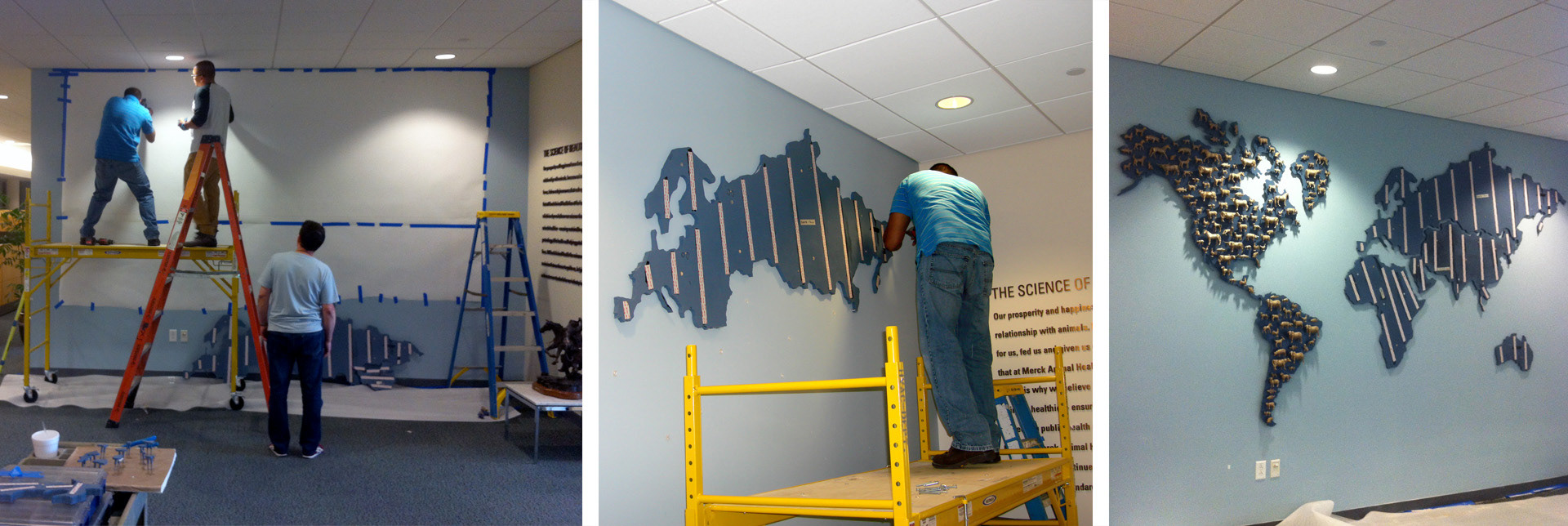
Weekend installation - executive area
Installation happened over a weekend to avoid disrupting the executive area during the work week. Piece by piece, continent by continent, the sculpture found its place on the wall. What had started as a sketch on a whiteboard (and a trip to a toy store) was now a permanent fixture in the headquarters of one of the world's largest pharmaceutical companies.
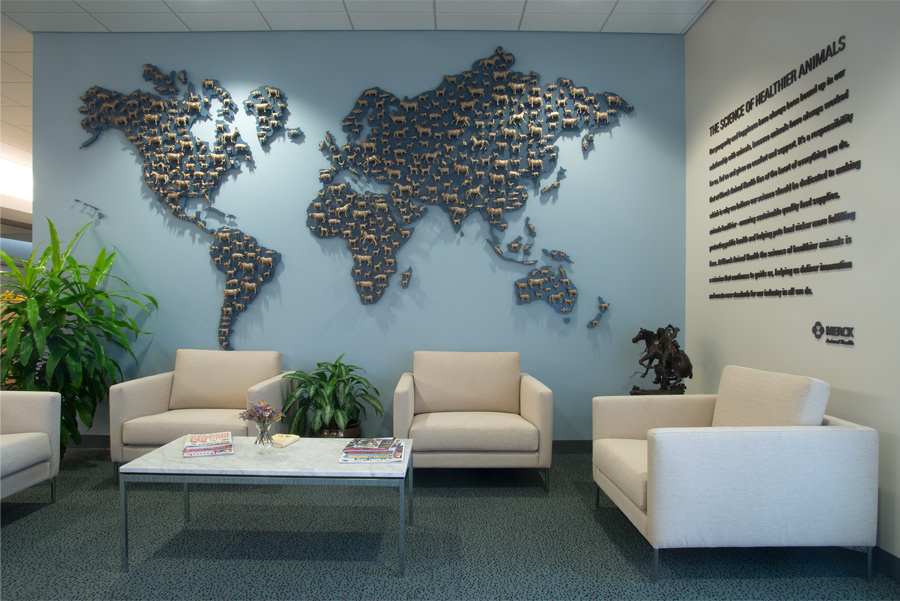
Finished installation - front view
The president was happy. The division had a space that reflected the scope and purpose of their work in a way no brand guideline could have prescribed. And the piece earned recognition from some of the most respected organizations in the design industry — proof that the most memorable work often begins with the simplest idea, and the willingness to build a prototype in your garage to find out if it's any good.