EDITORIAL WEB
America: Promised Land
America: Promised Land was a two-part documentary series on the HISTORY channel tracing how waves of immigration shaped the United States - from the Dutch and Quakers to Scandinavians, Germans, and African Americans, each group leaving an indelible mark on the country's identity and geography.
The design challenge was to create a digital editorial experience on history.com worthy of that subject matter, one that extended the reach of the series, deepened audience engagement with the stories, and gave viewers a reason to tune in. The approach was deliberately restrained: let the photography and testimony carry the weight, and build a design quiet enough to get out of their way.
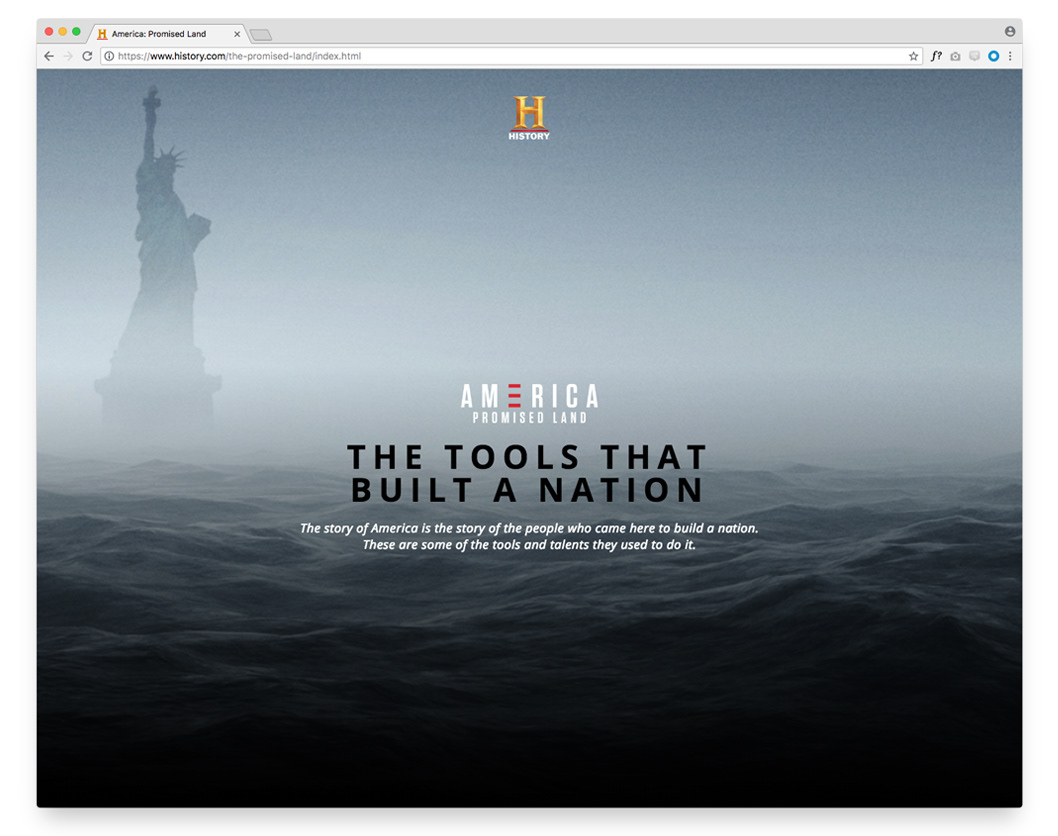
Home screen — full-bleed hero with motion
The home screen opened with full-bleed photography and subtle motion, a gentle parallax effect on page load and as users scrolled. The movement was purposeful, not decorative: it gave the imagery a sense of depth and presence that static layouts couldn't achieve, and established the premium editorial tone from the first moment.
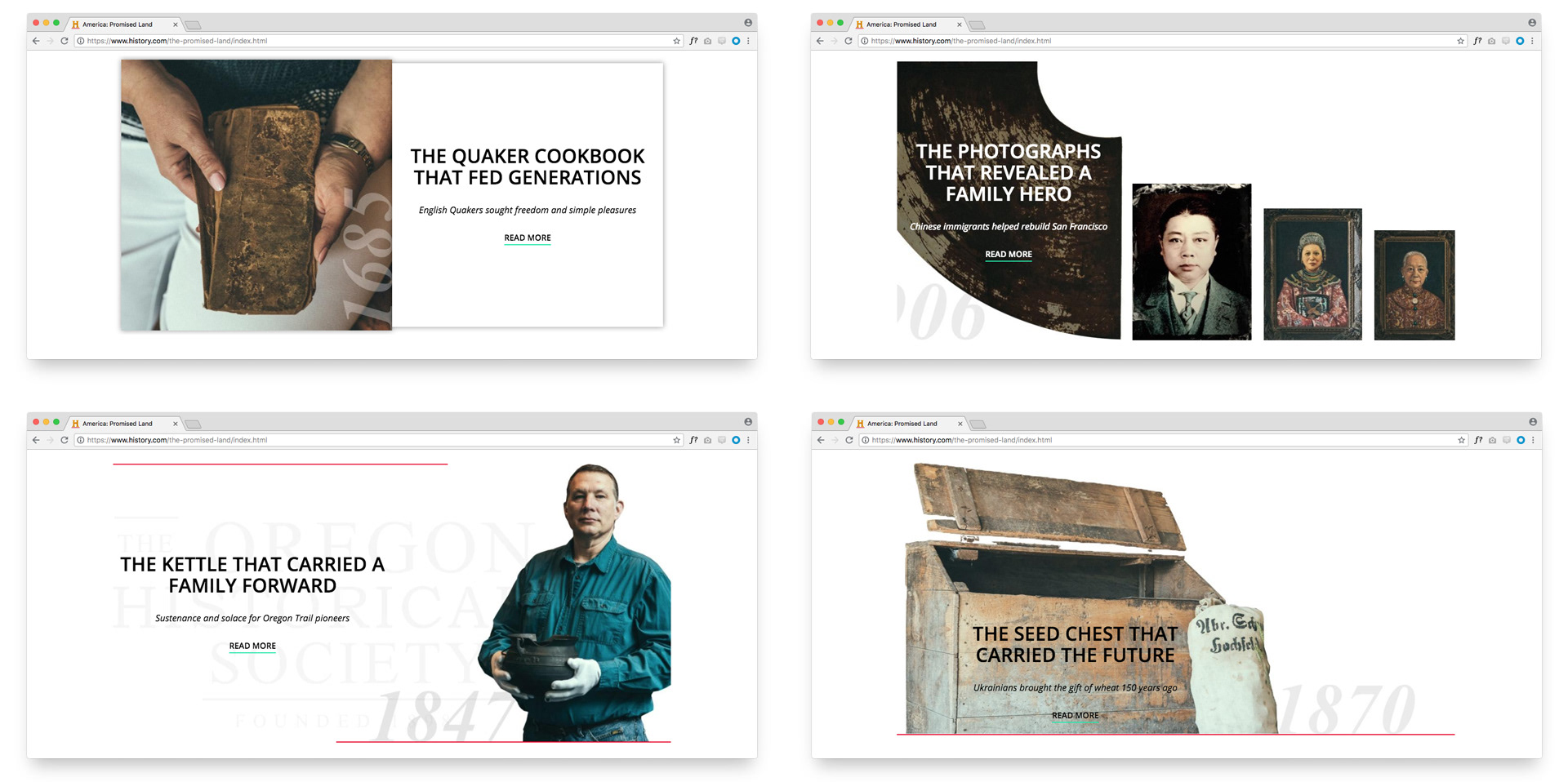
Landing page - six featured stories
Six stories anchored the landing page, each an entry point into a different chapter of the immigration narrative. The layout was deliberately clean - minimal chrome, generous whitespace, imagery and headline doing the work of drawing the eye. The design made a deliberate bet that the content was compelling enough to pull users in without embellishment.
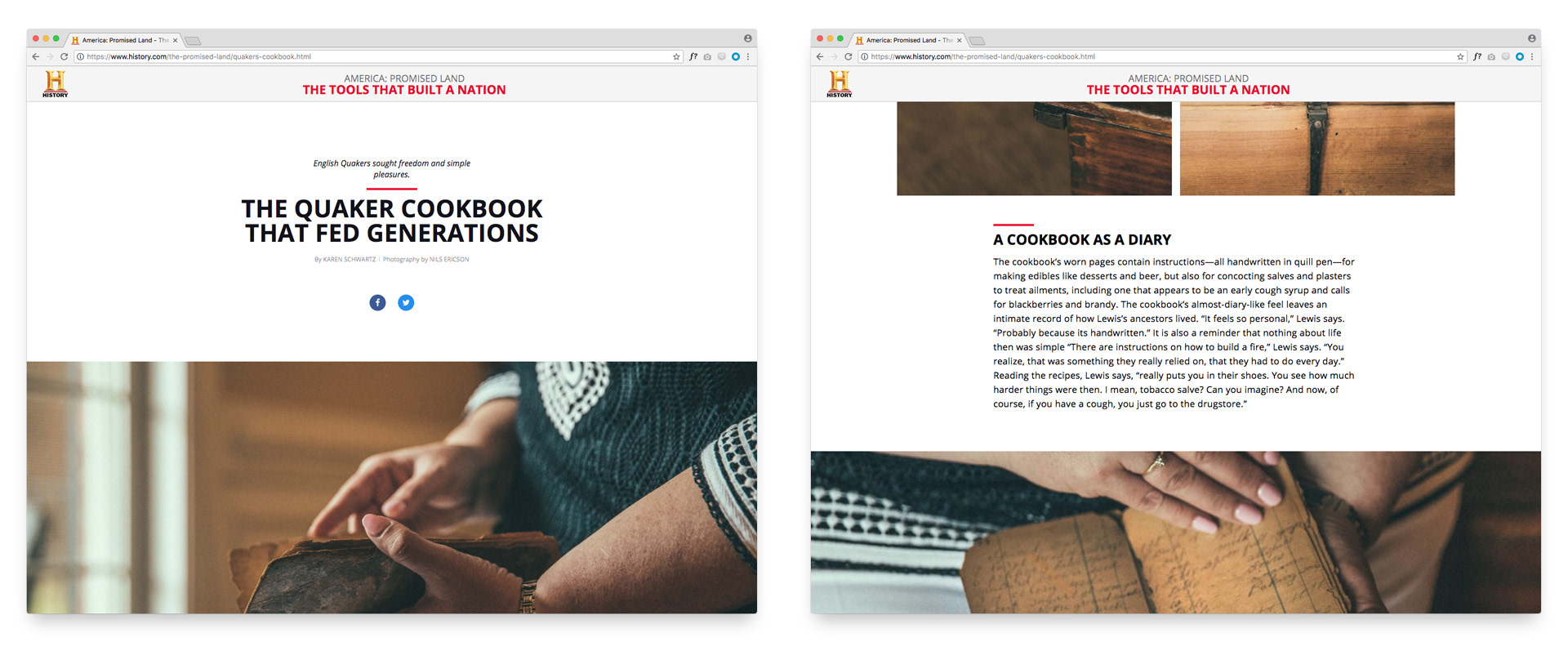
Individual story screens - photography and editorial copy
Each story unfolded as an editorial feature: immersive photography paired with narrative copy, paced to be read rather than scanned. The visual direction stayed consistent across all six stories - a unified editorial system that let the subject matter of each piece feel distinct without the design fragmenting from one story to the next.
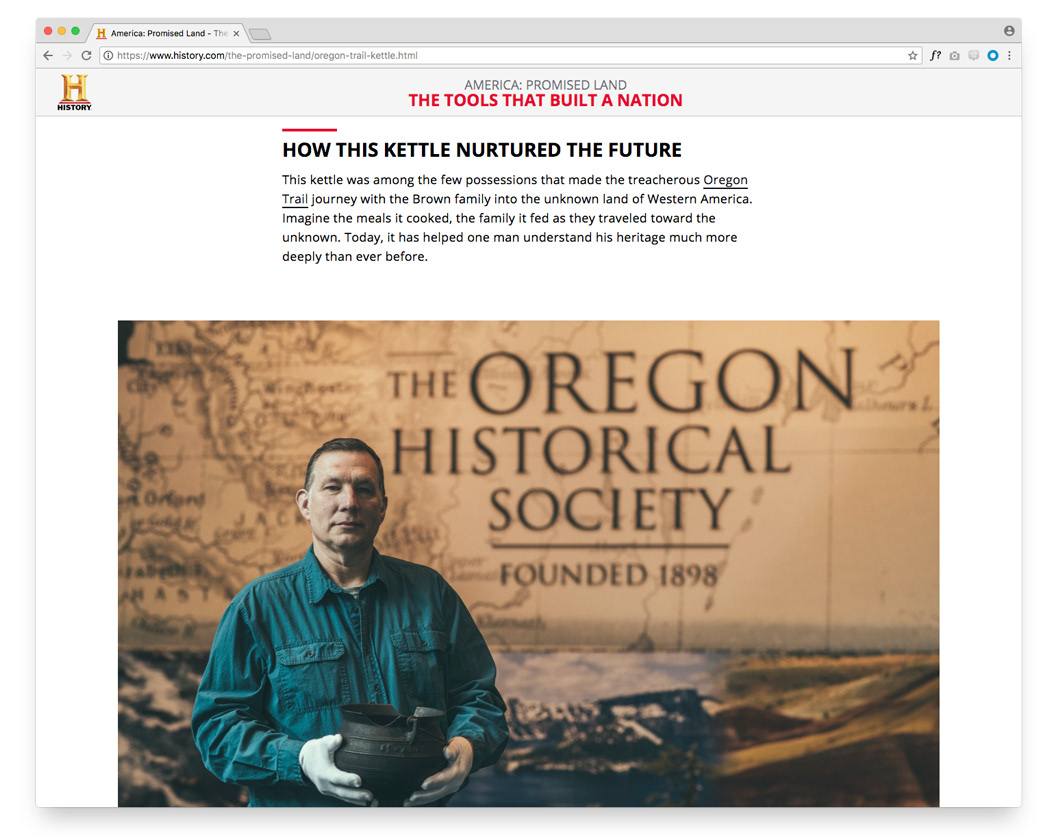
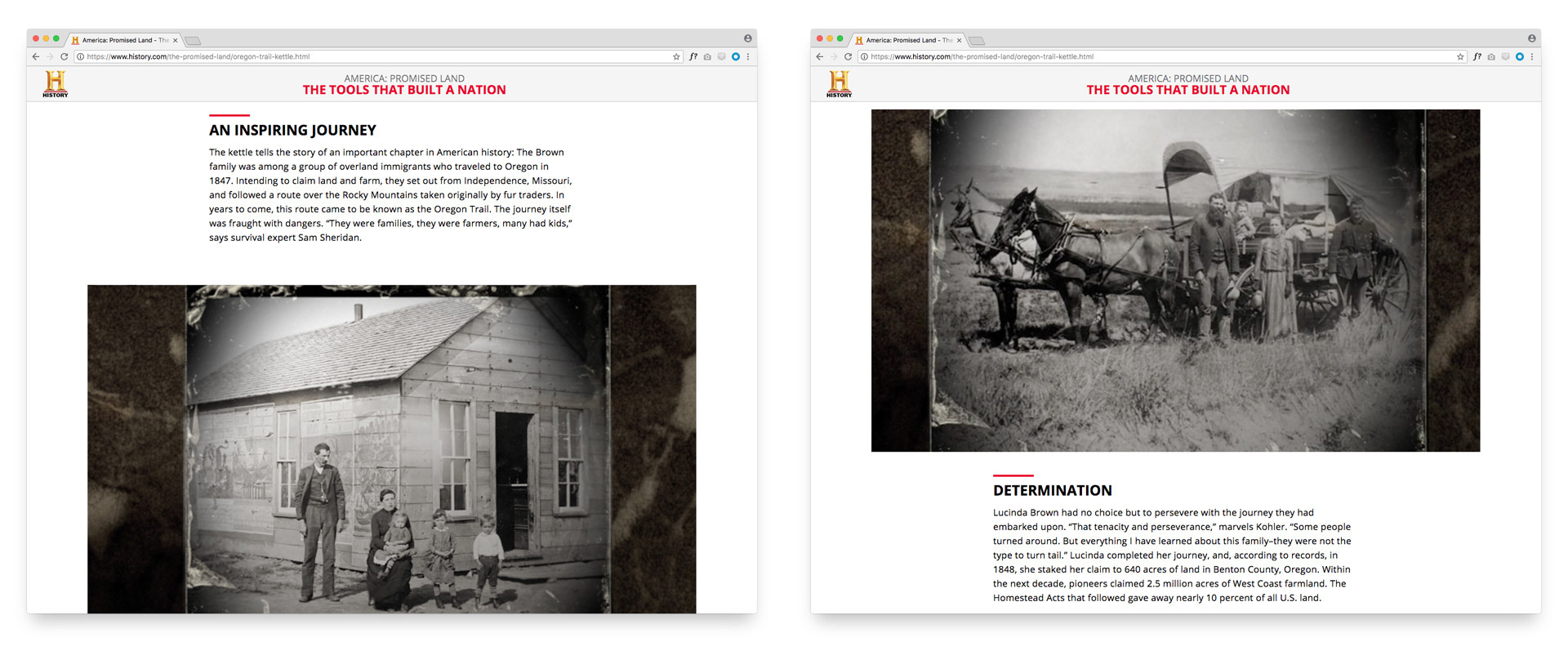
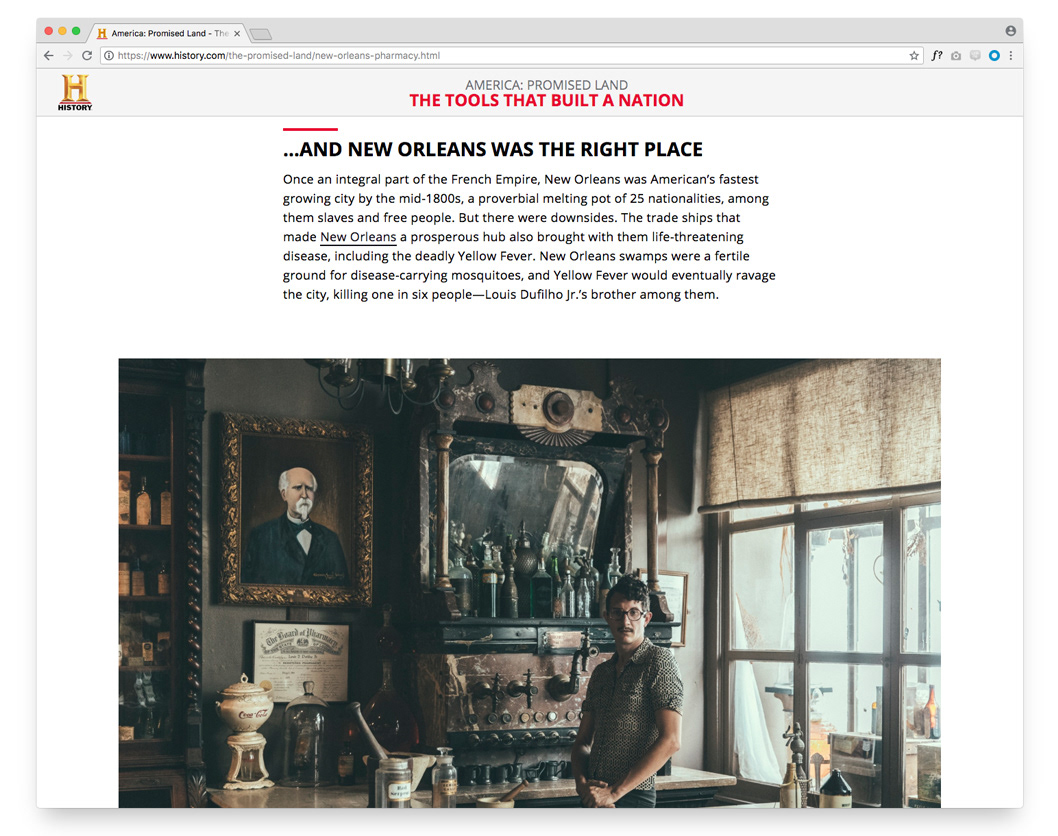
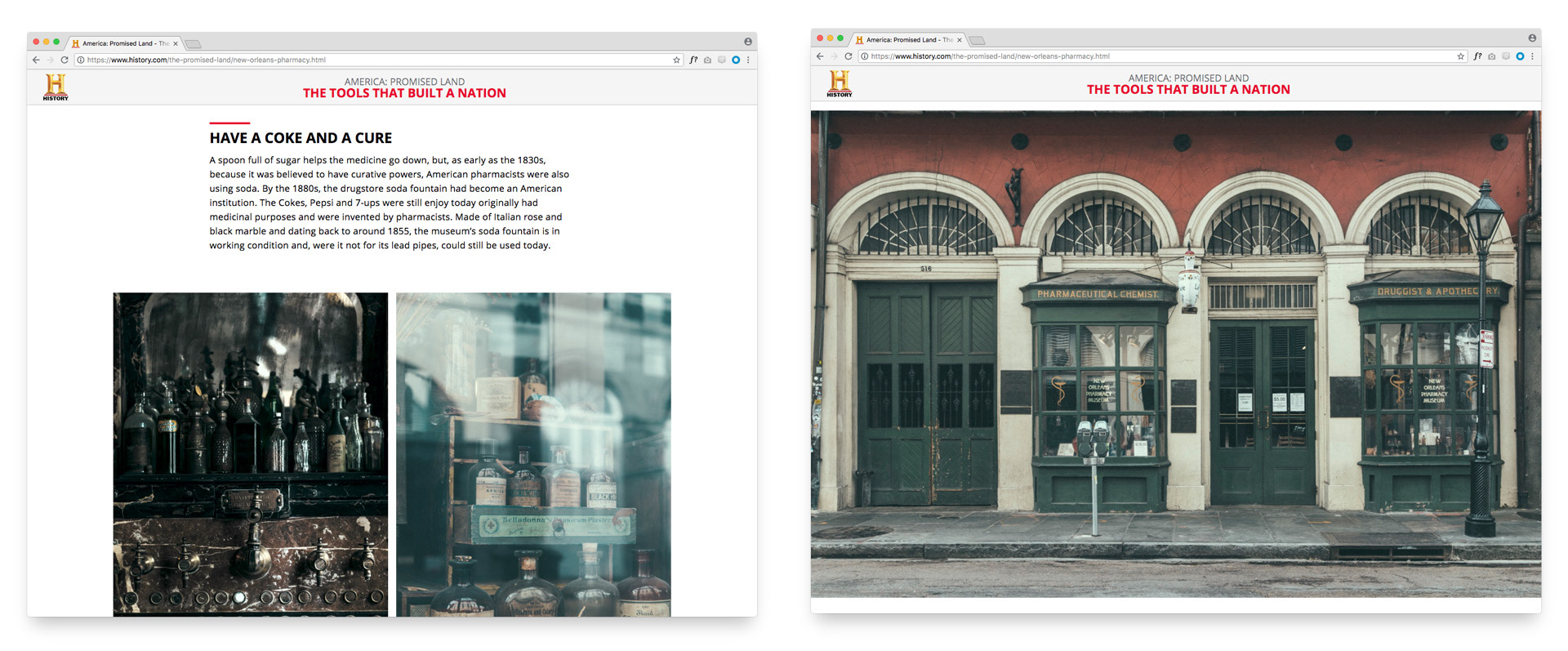
Individual story screens - photography and editorial copy
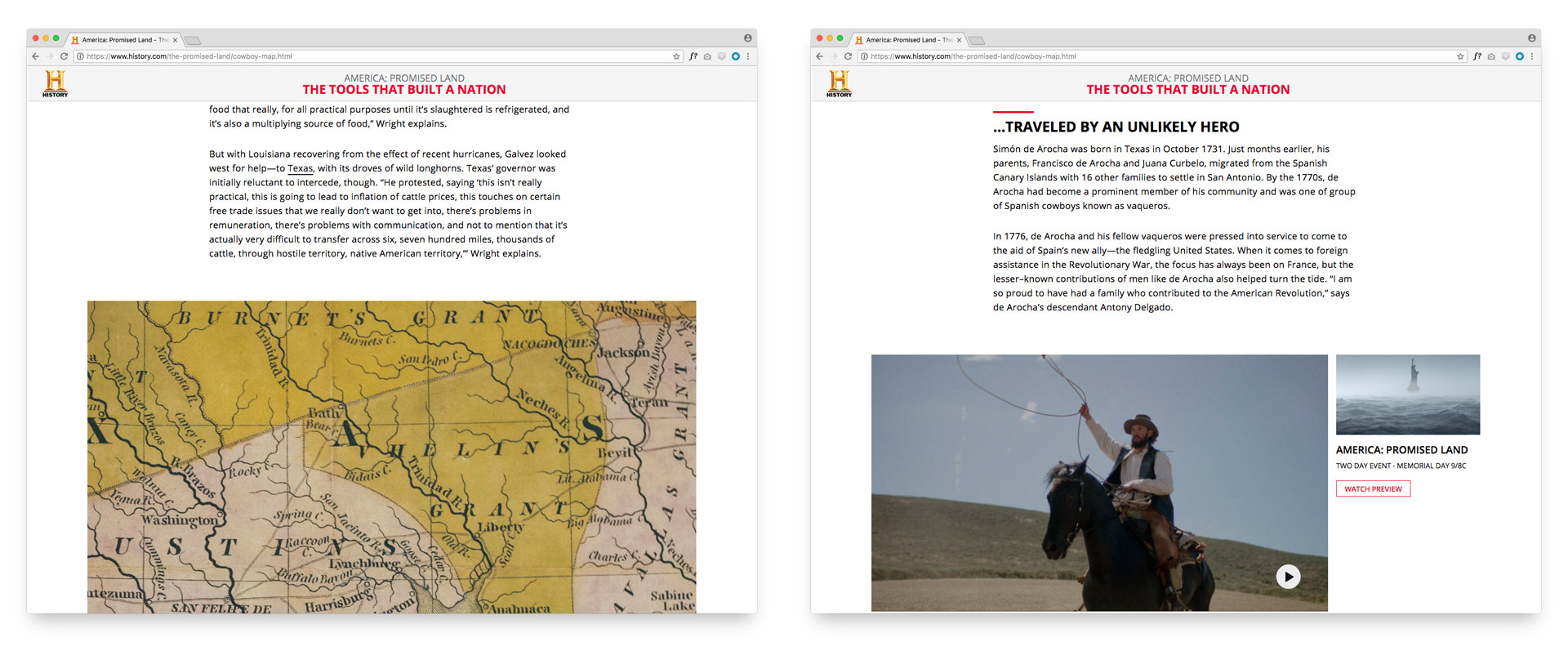
Short-form video - series clips and trailers
Short-form video was woven throughout to bridge the editorial experience and the on-air programming. Clips offered a window into the series; trailers drove tune-in. The integration kept users moving between reading and watching - deepening time spent and reinforcing the connection between the digital experience and the broadcast event.
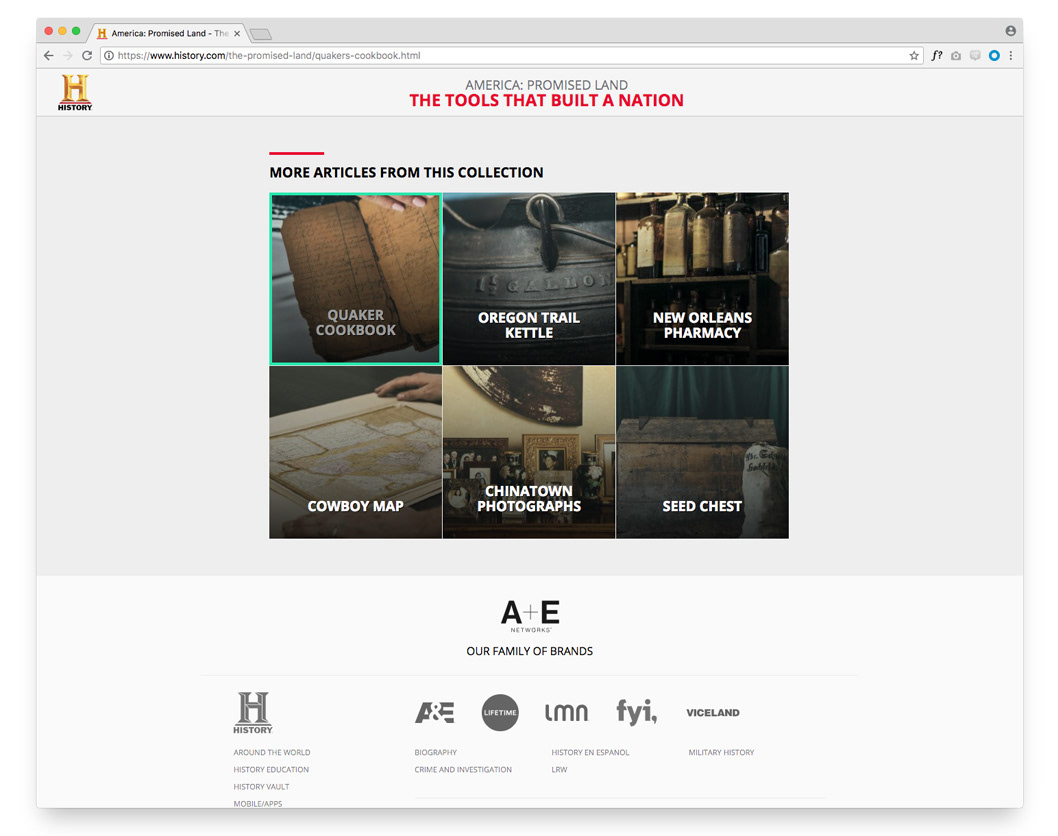
Story collection - bottom of each article
Every individual story closed with a curated collection of the remaining pieces, giving readers a frictionless path to continue. The pattern served dual purposes: reducing dead ends in the experience and meaningfully increasing content engagement across the site.